Key Takeaways:
- Service animals are not pets—landlords must allow them even in “no pets” properties under fair housing laws.
- Landlords cannot charge pet fees, deposits, or enforce breed/weight restrictions for service animals.
- You may request limited verification (like a letter from a licensed professional) but cannot ask for details about a tenant’s disability.
- Tenants remain responsible for their animal’s behavior and any damage, and landlords can act if the animal poses a threat or causes significant issues.
Animals of any kind - whether feathery, furry, or scaly - are a huge problem for most landlords because of the risk of damage to their property and the potential nuisance to the occupants of the building.
Typically, landlords deal with this issue by refusing to rent to pet owners or imposing additional conditions on tenants with pets.
But that all changes when that animal is a service animal. Fair housing laws mandate that landlords cannot refuse to rent to a potential tenant because they own a service animal.
This is because service animals are not considered pets. Therefore, the rules that apply to pets in the rental property do not apply to service animals.
What is a service animal?
What should you, as a landlord, know about renting to tenants with service animals?
How can you protect yourself when renting to such tenants?
Let Liberty Real Estate Services give you the scoop.
Learn how we can help you maximize your home’s potential.
What is a Service Animal?
A service animal is a dog (regardless of breed or type) or, sometimes, a miniature horse that has been trained to perform specific tasks to assist a person with a disability.
These animals are certified to perform a range of tasks to assist individuals with physical, sensory, psychiatric, intellectual, or other mental disabilities.
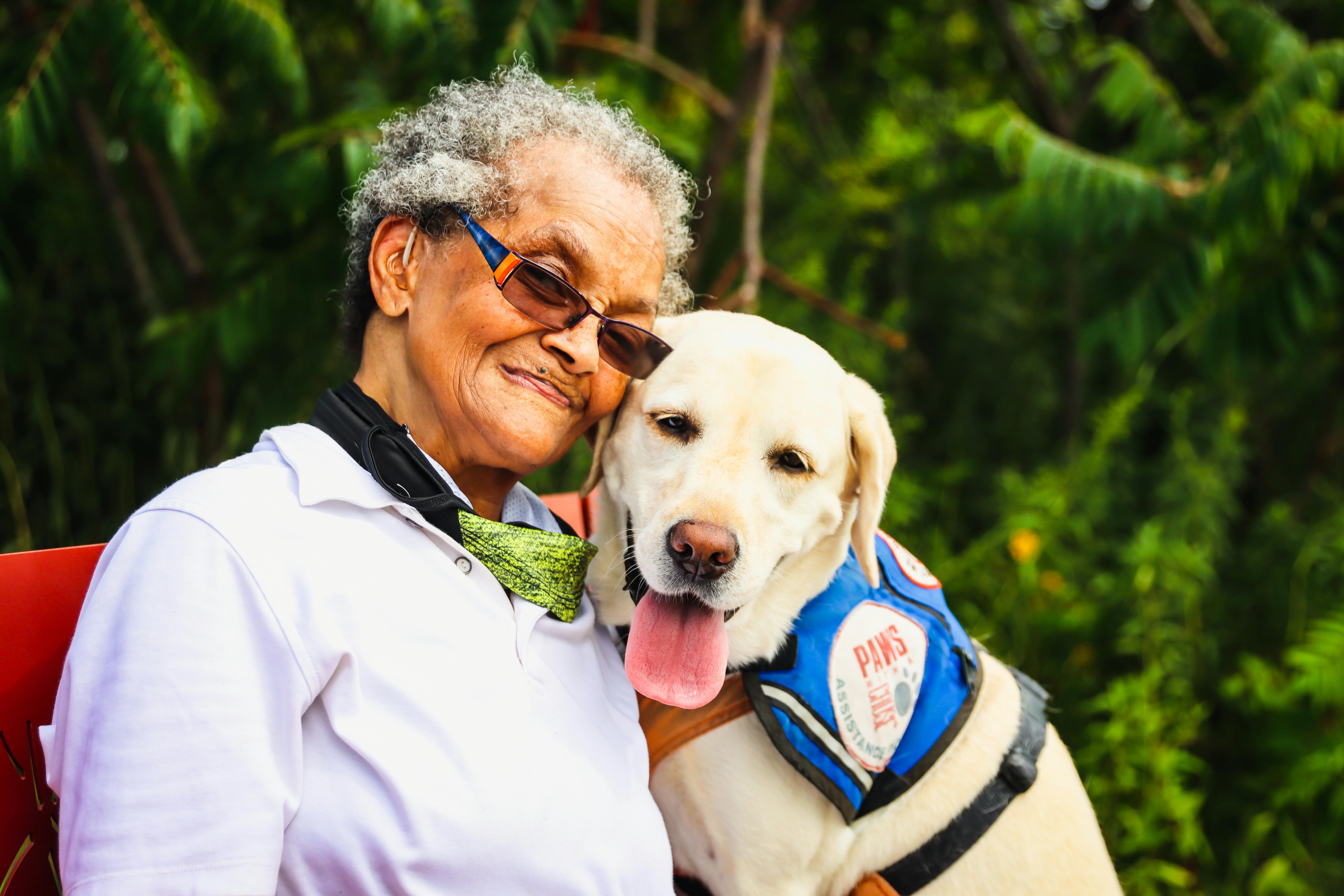
To protect these individuals, numerous laws have been enacted to ensure that they have fair housing opportunities.
Persons with disabilities who need an assistance animal for everyday life may not be denied housing on account of the service animal.
Landlords must make reasonable accommodations for such renters. This is the law, but it’s also another helpful way to keep renters happy .
What kinds of individuals typically need the assistance of a service animal? If a tenant has the following disabilities, they qualify for reasonable accommodations:
- A physical or mental impairment that limits one or more major life activities considerably. That is, they struggle to walk, see, work, clean, dress, etc., because of the disability.
- They have a history of such impairments or may be regarded as having such impairments.
- Here are a few examples of individuals who may need service animals:
- People with diabetes may need a dog that is trained to sense and alert them when their blood sugar is low
- A person with depression may need a service animal that is trained to remind them to take their medication.
- Individuals who suffer from epilepsy may need a dog that is trained to detect the onset of a seizure and safeguard the person during the episode.

By law, service animals are not pets, and the laws that apply to pets do not apply to them. The biggest difference between a service animal and a pet is that service animals are trained and often certified.
Service animals also have identification papers, and they may wear an identification collar or harness.
Guidelines for Landlords Regarding Service Animals in their Rental Properties
Since service animals are not considered pets, the rental’s pet policy does not apply to them. Even if a landlord has a “no pets” policy, they must accommodate tenants with service animals.
Service animals are allowed to go anywhere within the rental property that their owner is allowed to go. Restrictions cannot be imposed on the animal unless they also apply to humans.
While landlords are legally allowed to charge pet rent and pet deposits, they cannot impose these requirements on owners of service animals because the animals are legally not regarded as pets.
Landlords cannot impose breed or weight restrictions on service animals. Some rental properties do not accept dogs that weigh more than 30 pounds. These limits cannot apply to a service animal.
Landlords may request a letter from a licensed health professional to verify that a prospective tenant actually needs a service animal. However, they cannot request specific information about the individual’s disability.
To protect themselves from renters with fraudulent service animals, landlords may contact the medical professional to confirm that they wrote the letter.
Landlords can request copies of the animal's health records to ensure that it is in good health, but unless the animal is a trained assistance animal, they cannot ask for its certification details.
Learn more about our trusted team.
What to Know When Renting to Tenants with Service Animals
When dealing with service animals on their rental property, landlords have the right to protect their investment.
In accordance with their lease agreement , landlords can legally enforce the following rules or conditions on a tenant with a service animal:
The tenant is responsible for their animal and its behavior. They must clean up after the animal and ensure that it doesn’t bother other occupants of the building.
The landlord can charge the tenant for any property damage caused by the animal. The tenant is legally obligated to pay for such repairs or cleaning.
If the animal poses a threat to others, disturbs other residents, or causes considerable damage to the building, the landlord may write a warning letter to the tenant.
If the above issues cannot be reasonably resolved, the landlord reserves the right to evict the tenant.
Conditions for Denying a Service Animal
In some situations, a landlord is legally allowed to deny accommodations to a tenant with a service animal. A landlord can deny accommodation if they fall under Chapter 186-2.02, Section 1-C of Georgia’s fair housing law.
In other words, a landlord is exepmpt:
- If they own a rental property with four units or fewer, and they live in one of the units. For instance, a landlord does not have to provide accommodations if they own a fourplex or triplex, live in one of the units, and rent out the other two or three.
- If they own a single-family home that they are renting without using a real estate agent or other service. Landlords in this category do not have to provide accommodations.
- If there is insufficient documentation for the service animal, the landlord may deny the tenant’s request on that ground.
- If there is evidence that the dog will pose a direct threat to others and the problem cannot be eliminated, the landlord may deny the request.
- If sufficient evidence exists that the animal will cause substantial damage beyond normal wear and tear, the landlord may also deny the request.
Conclusion
To sum up, when renting to tenants with service animals, landlords must avoid decisions that can hurt their property or land them in legal hot water.
One way to do this is by asking a property management expert like Liberty Real Estate Services for guidance on renting to tenants with service animals. It is also important for landlords to stay up-to-date with the changing laws in their locality.
